
Aim:

Collaborating with children and young people to reimagine treescapes
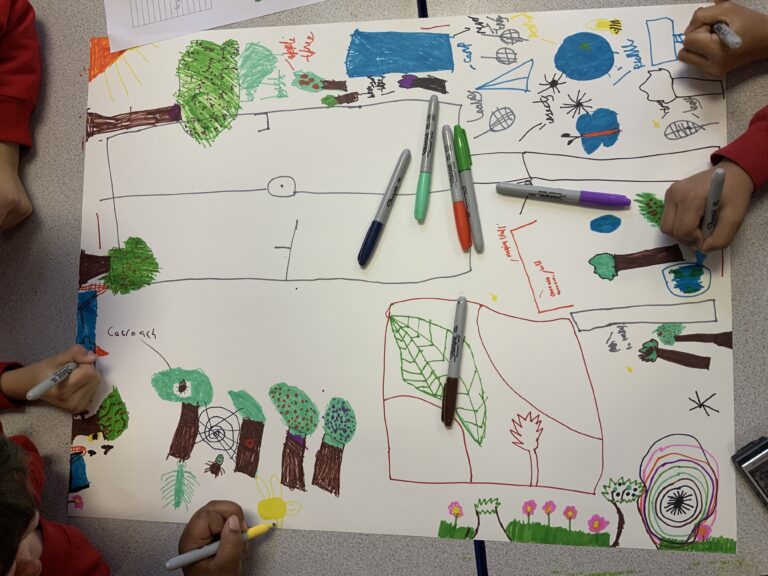
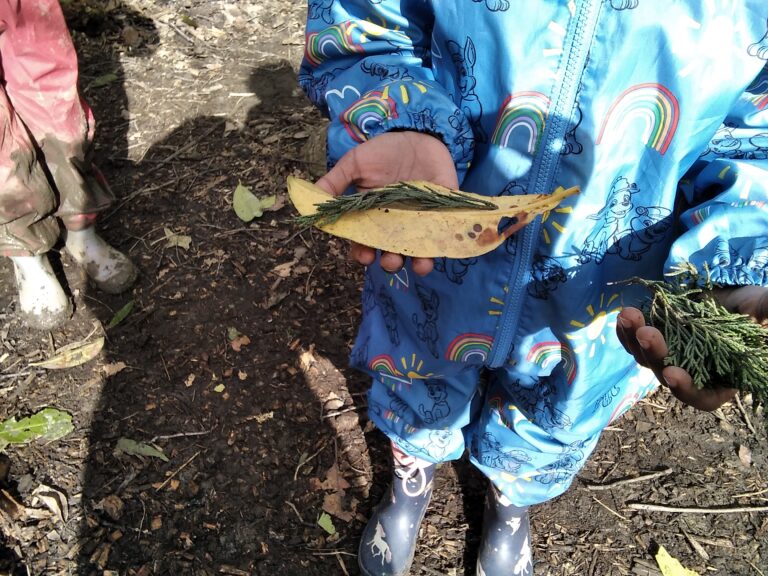
Children working on a map of a landscape with treesChild holding some leaves

Project Description

Despite increasing youth engagement with climate action, children and young people’s voices are often overlooked in environmental policy and planning.

Our project set out to address this by co-developing more hopeful, equitable and resilient treescapes for the future.

The team worked with children and young people (CYP) in schools and communities, including those from marginalised and migrant backgrounds with diverse and global experiences and identities (Global Youth), to co-develop new knowledge to inform future policy. Together, they co-produced a ‘lexicon of experience’, emphasising a rights-based approach that respects CYP’s agency and connection to nature.

What we discovered...

  • Our emerging child-led typology of treescapes reveals that CYP view and value treescapes in more diverse ways than articulated in existing planning and decision-making frameworks.
  • Decision-making frameworks incorporating CYP’s views and agency can build resilient, intergenerational connections to the landscape. Woodland creation, restoration and care require a new language and pedagogy that prioritises human connection, heritage and collective thinking rather than just economic value. 
  • Global youth’s understandings challenge conventional Western knowledge and broaden understandings of environmental stewardship and global responsibility. Their knowledge emerges from more intimate histories with trees, including cultural practices and symbols and sources of food, timber and fuel, as well as first-hand experiences of the effects of treescape degradation.


Project Lead(s)

Professor Kate Pahl and Dr Caitlin Nunn, Manchester Metropolitan University; Professor Simon Carr, University of Cumbria; Professor Peter Kraftl, University of Birmingham

Project Website

https://www.treescapes-voices.mmu.ac.uk